

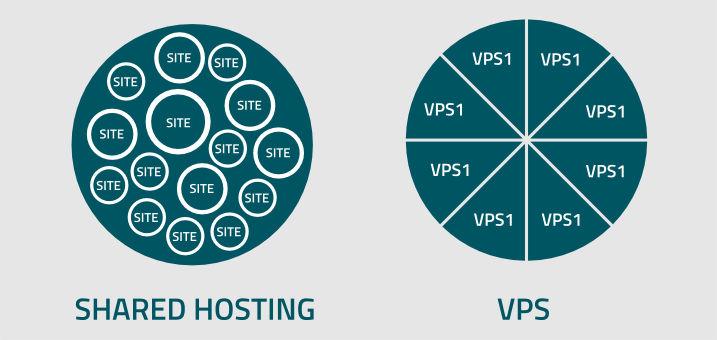
It’s only a matter of time before most website owners say goodbye to shared hosting and upgrade to a VPS hosting plan. Unfortunately, many either wait too long to make the switch or have no idea when it's time to upgrade to a VPS hosting plan. In this article, we explain the key differences between shared and VPS hosting so you know when a hosting change is in order.
Shared Hosting Versus VPS Hosting
Shared hosting is a very affordable starting point that allows anyone to establish a web presence. With shared hosting, you share one physical server and its resources with other users. In a certain way, it’s sort of like sharing a bunk room in a hostel with a bunch of strangers.
This type of hosting is great if your needs are pretty basic, but it can easily become inadequate the minute your website gains some traction. You can tell you’ve reached the limits of your shared hosting plan when your website becomes sluggish and you start experiencing downtime.
VPS (Virtual Private Server) hosting gives you access to a virtually partitioned server that you can configure to meet your needs and enjoy functionality equivalent to a dedicated physical server, without its steep price. You can compare VPS hosting to an apartment building. Even though all tenants live in the same building, they each have their own apartment to furnish and decorate as they like.
A VPS typically has its own operating system, which can be fully customized and enhanced with various third-party applications. This flexibility makes VPS hosting ideal for custom web apps and large websites that wouldn’t work well with shared hosting, and it's also an ideal choice for businesses that plan to host multiple websites in the future.
Benefits of VPS Hosting
VPS hosting comes with several irresistible benefits that shared hosting simply doesn’t offer:
-
Performance: Search engines don’t like it when websites take a long time to load, and they use speed as an important ranking factor. With VPS hosting, you can get the performance you need for your website to load instantly, regardless of how much traffic it gets.
-
Dedicated IP: VPS hosting gives you your own dedicated IP address, so the bad behavior of other customers won’t affect you. You can even purchase multiple IP addresses and use each address for a different purpose.
-
Scalability: VPS hosting plans are nearly infinitely scalable, and you can start off with just a small amount of resources and gradually increase them over time to accommodate your needs. That means you always pay only for what you really need, making VPS hosting cost-effective.
-
Root access: VPS hosting gives you complete control over your server environment, allowing you to customize it for your needs. You can install any software you want, and you don’t have to wait for your hosting provider to change basic settings—you can change them yourself.
-
Reliability: Because VPS hosting gives you the resources to handle traffic surges, it is much more reliable than shared hosting. The fact that you have access to your own virtually-partitioned server means that the activity of other customers doesn’t affect you.
Conclusion
VPS hosting hits the sweet-spot between shared and dedicated hosting, providing the power and control of a dedicated server at an affordable price. At BaCloud, we offer reliable VPS hosting at unbeatable prices and with customer support that you can depend on. With multiple customizable VPS hosting plans, unlimited bandwidth, full root access, and instant deployment, we can help you take your online presence to the next level and position you for success.