

The best AI coding bot in 2026 depends less on raw model IQ than on where the agent runs and how close it is to your real workflow. If you want the fastest browser-native path from idea to a live product, Replit Agent is the clear winner because it combines prompting, coding, database setup, secrets management, collaboration, previewing, and publishing in one place. If you want the best all-around professional assistant around a GitHub-based workflow, GitHub Copilot remains the safest default because it now spans IDE chat, cloud agents, code review, custom instructions, and broad model choice. If you want a programmable coding stack you can embed into your own product, OpenAI Codex plus the Responses API is the strongest “build your own agent” option today. For governed enterprise deployments, Tabnine, Sourcegraph, Cody, and Amazon Q Developer stand out for privacy controls, codebase context, and security/compliance features.
A second big conclusion: there is no single market anymore. The field has split into four categories: inline copilots such as Copilot and Tabnine; AI-native IDE agents such as Windsurf and Claude Code; browser-native app builders such as Replit, v0, and Bolt; and programmable agent platforms such as OpenAI’s Responses API and Google’s new managed-agent stack. That segmentation matters more than marketing claims because browser builders optimize for speed to deploy, IDE agents optimize for depth in existing repos, and API frameworks optimize for customization.
There is also unusual product churn right now. Amazon CodeWhisperer is now folded into Amazon Q Developer. Sourcegraph has discontinued Cody Free and Cody Pro, leaving Cody as an enterprise product. And Google has announced that Gemini Code Assist for individuals will stop serving requests on June 18, 2026, as Google consolidates around Antigravity and managed agents. Any buying decision should treat those transitions as material rather than footnotes.
What AI coding bots actually are
AI coding bots are no longer just autocomplete. The mainstream tools now span inline completion, code chat, repo-aware planning, multi-file edits, test generation, security review, terminal actions, MCP-based tool use, and—in the most advanced products—autonomous cloud sessions that open branches and pull requests for you. GitHub Copilot’s cloud agent can research a repository, create a plan, make code changes, and optionally open a pull request; OpenAI’s Codex can read, edit, and run code across IDE and cloud workflows; Replit Agent can set up projects and carry work from planning to deployment; and Amazon Q Developer adds code review, security scanning, refactoring, and upgrades inside the IDE.
A useful mental model is this: the farther a tool moves from “suggest the next line” and the closer it moves toward “own a task,” the more important its context system, validation loop, and operational safety become. That is why leading products now expose custom instructions, rules, skills, MCP servers, code search.
How to evaluate these tools
The strongest selection criteria are: accuracy on your stack, quality of diffs over long sessions, language/framework coverage, integration depth, deployment support, collaboration, pricing predictability, privacy controls, latency, and customizability. In practice, most teams overweight benchmark talk and underweight the last four. That is a mistake. A slightly weaker model with great context, low latency, secure data handling, and clean Git/CI integration often outperforms a “smarter” model in daily work. GitHub explicitly distinguishes models by latency and hallucination tradeoffs; Tabnine emphasizes governance, model choice, and on-prem deployment; Sourcegraph emphasizes context across local and remote codebases; and Windsurf leans hard into MCP, previews, browser feedback, and agent orchestration.
The other key criterion for “coding your app online” is whether the platform closes the loop to production. Replit, v0, Bolt, and Google AI Studio are the strongest here because they tightly couple generation, preview, and publishing. Copilot, Tabnine, Amazon Q, and Cody are usually better once you already have a repo, CI, and infra choices in place.
The strongest tools right now
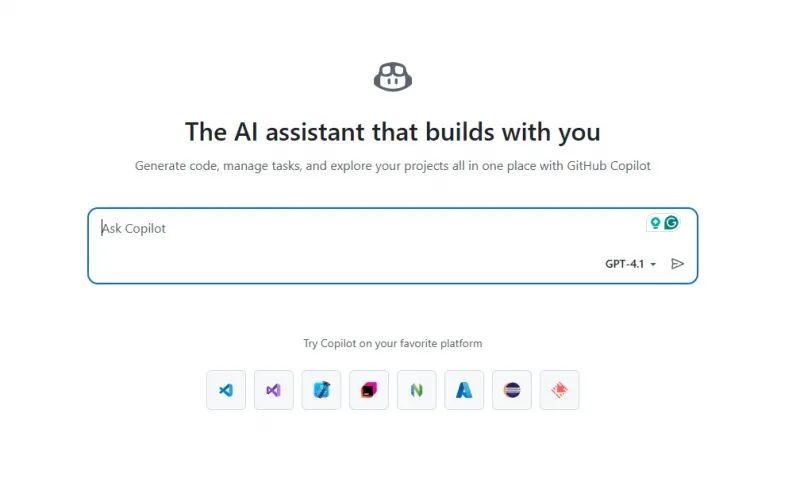
GitHub Copilot is still the broadest professional default. It offers unlimited paid-plan completions, multi-model chat, cloud agent sessions, code review, repository custom instructions, and strong IDE coverage. Its main strengths are ecosystem gravity and mature GitHub workflow integration; its main weakness is that deployment is not a first-class, browser-native experience, and its pricing model will change on June 1, 2026, to usage-based billing. Best for teams already living in GitHub. Representative prompt: Implement OAuth login, add regression tests, run lint/tests, and open a PR. Pricing today: Pro $10/month, Pro+ $39/month, Business $19/user/month, Enterprise $39/user/month.
OpenAI Codex plus the Responses API is the best programmable stack if you want to build or embed your own coding agent. Codex now spans cloud workflows and a VS Code extension, while the Responses API adds built-in tools such as code interpreter, file search, web search, and remote MCP servers. Its strength is extensibility; its weakness is that it is not a packaged “one-click app builder” on its own. Best for startups building internal engineer copilots, custom bots, or agentic dev workflows. Representative prompt: Plan the feature, inspect the repo, edit files, run tests, and summarize remaining risks. Pricing is mixed: ChatGPT plans include Codex, while API work is token-based; Code Interpreter is $0.03/session, and GPT-5.5 is priced at $5/M input tokens and $30/M output tokens in the API docs. Also note: the Assistants API is deprecated and scheduled to shut down on August 26, 2026, in favor of Responses.
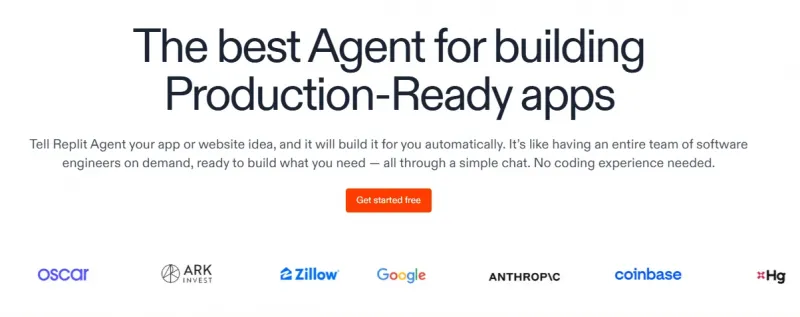 Replit Agent is the best answer to “I want to code my app online.” It is browser-native, can create projects from plain language, add a built-in SQL database, manage secrets, collaborate in real time, and publish from the same workspace. Its weaknesses are a lack of cost predictability, heavy agent usage, and a less traditional enterprise posture than the most governance-heavy options. Best for indie founders, hackathons, product prototypes, education, and rapid SaaS MVPs. Representative prompt:
 Build a full-stack expense tracker with auth, Postgres schema, tests, and a publishable landing page. Pricing snapshot: Starter free, Core $20/month billed annually, Pro $95/month billed annually.
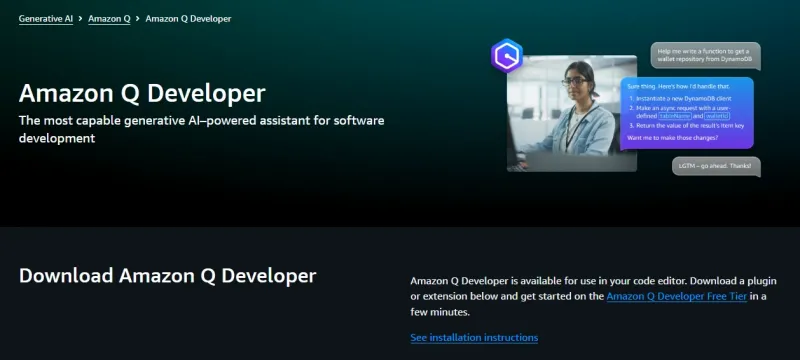
Amazon Q Developer is the best choice for AWS-centric teams. It integrates coding help with security scanning, code review, Java and .NET transformation, GitHub/GitLab workflows, and AWS knowledge. Its weakness is that it is less delightful than Replit or v0 for greenfield browser-first app generation if you are not committed to AWS. Best for enterprises already standardized on AWS or teams modernizing legacy Java/.NET workloads. Representative prompt: Review this service for security issues, generate fixes, and prepare an AWS-ready deployment path. Pricing: Free tier with 50 agentic requests/month; Pro is $19/user/month. CodeWhisperer capabilities are now part of Q Developer.
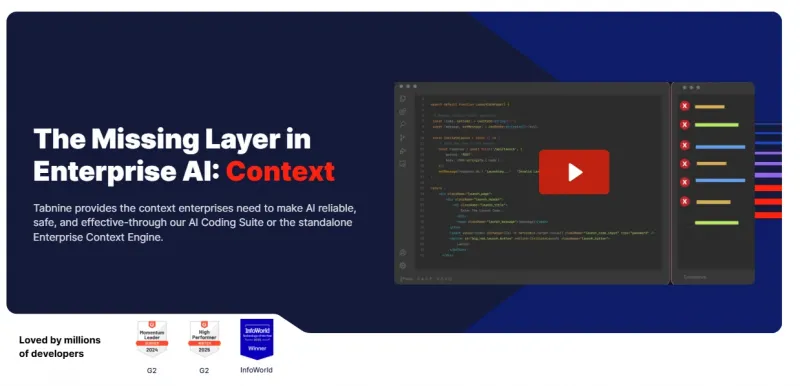
Tabnine is the most credible privacy-first option for regulated codebases. It now offers completions, chat, autonomous-agent workflows, MCP support, CLI access, and a deeply governed enterprise context. Its main strength is deployment flexibility—cloud, on-prem, or air-gapped—with a no-train/no-retain position for Tabnine models. Its weakness is that it is not a browser-native environment for launching apps. Best for enterprises that care as much about governance as they do about model quality. Representative prompt: Refactor this service, generate tests, and align output to our internal architecture rules. Pricing: Code Assistant $39/user/month annual; Agentic Platform $59/user/month annual.
Windsurf is the most capable AI-native IDE for many developers, but it is less “online” than Replit because its core product is a desktop editor. Its strengths are Cascade, previews, browser feedback, deploy flow, MCP support, and strong zero-data-retention controls for teams and enterprise. Its weakness is simple: if you want everything inside a browser tab, Replit, v0, and Bolt are easier. Still, for serious app building with rich feedback loops, it is excellent. Representative prompt: Inspect the live preview, capture the console errors, fix the auth flow, and deploy the patch. Pricing: Free, Pro $20/month, Teams $40/user/month, Enterprise custom.
Sourcegraph Cody is now an enterprise-only specialist rather than a general consumer recommendation. That actually clarifies its positioning: it is about a deep understanding of the codebase, cross-repo context, and now MCP-powered interoperability with external agents. Its weaknesses are accessibility and pricing for smaller teams; the Free and Pro plans ended in 2025. Best for large, complex monorepos where retrieval quality matters more than shiny UI. Representative prompt: Trace where this symbol is used across repos and propose a safe migration plan. Pricing starts at $16K for Sourcegraph’s enterprise plan, with Cody included in that enterprise context.
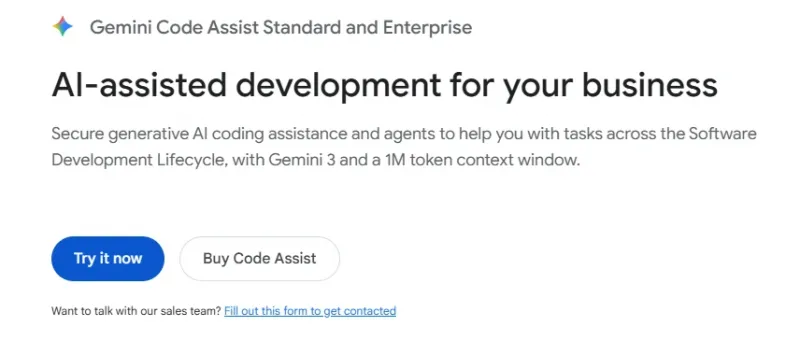 Google Gemini Code Assist remains strong for Android, Google Cloud, and Firebase-linked development, but it is strategically in transition. Google provides support for a broad range of programming languages and IDEs, and its enterprise editions include robust security/privacy controls. But Google has also announced that individual Gemini Code Assist and Gemini CLI flows will stop serving requests on June 18, 2026, as it consolidates around Antigravity, Google AI Studio, and managed agents. If you are choosing Google today, you should evaluate Antigravity and AI Studio, not just legacy Code Assist branding. Pricing for business editions: Standard $22.80/month monthly or $19/month annual; Enterprise $54/month monthly or $45/month annual.
Open-model coding stacks deserve a place in any rigorous comparison. CodeT5+ remains an important research milestone, but in practical 2026 agentic workflows, the more relevant open-weight options are Qwen3-Coder, Qwen3-Coder-Next, DeepSeek-Coder-V2, and StarCoder2. Their advantage is privacy, cost control, and customizability; their disadvantage is product polish. They are best when paired with your own tooling layer, not used raw.
Comparison table
| Tool | Best fit | Main advantage | Main tradeoff | Pricing snapshot |
|---|---|---|---|---|
| Replit Agent | Browser-native app building | Build, DB, secrets, publish in one place | Credit-heavy use can get expensive | Free; Core $20 annual; Pro $95 annual |
| GitHub Copilot | General pro development | Best GitHub/PR workflow integration | Deployment is external; billing changes June 1 | Pro $10; Pro+ $39; Business $19; Enterprise $39 |
| OpenAI Codex + Responses | Custom agents/platform teams | Most programmable and extensible | You assemble the full workflow | ChatGPT plans + API token pricing |
| Windsurf | AI-native IDE power users | Excellent live preview/MCP/agent loop | Best experience is desktop-first | Free; Pro $20; Teams $40 |
| Amazon Q Developer | AWS-heavy teams | Security, reviews, modernization | Less elegant for browser-first greenfield apps | Free; Pro $19 |
| Tabnine | Privacy-first enterprise | On-prem/air-gapped governance | Less compelling for novices/online app launch | $39 / $59 annual tiers |
| Sourcegraph Cody | Large codebases | Exceptional repo context | Enterprise-only and expensive | Enterprise starts at $16K |
| Gemini Code Assist / Antigravity | Google/Android/Firebase shops | Strong Google stack fit | Product transition in progress | Standard $22.80; Enterprise $54 monthly |
| v0 / Bolt | Frontend-first online builders | Fast UI-to-deploy loop | Backend depth varies | v0 Free; Bolt Free + paid usage tiers |
The pricing and plan snapshots above were checked against the current official vendor pages and docs on May 20, 2026; usage-based products can change materially depending on model choice and token consumption.
Which tool fits which developer
For a solo indie developer, my ranking is: Replit Agent first if you want true browser-native shipping, v0 second if your product is frontend or Next.js-heavy, and OpenAI Codex third if you want to own the workflow and integrate it into your own stack. For a startup, I would start with GitHub Copilot for the core repo workflow, then add v0 or Replit for fast product iteration. For an enterprise, the shortlist is GitHub Copilot for breadth, Tabnine for privacy/governance, Sourcegraph Cody for complex codebases, and Amazon Q for AWS-heavy environments. For an educator, Replit remains the best browser-based teaching environment, while GitHub Copilot Student is the best zero-cost professional assistant. For a student, the strongest combination is GitHub Copilot Student + Replit Starter/Core, with Bolt or v0 for portfolio apps.
Security, prompting, and testing discipline
The best practices are surprisingly stable across vendors. First, keep prompts outcome-first and constraint-rich: specify the framework, target files, success criteria, deployment target, and whatnot to change. Second, externalize conventions into repo rules or instructions—GitHub’s custom instruction files, Windsurf rules/memories, Tabnine coaching guidelines and MCP controls, or Google/Anthropic skill files all exist because coding performance improves when the model can inherit local norms instead of re-guessing them every turn.
Third, treat secrets and customer data as first-class risks. Replit’s Secrets tool is a good model: secrets should live in environment-variable stores, not prompts, source code, screenshots, or chat transcripts. Tabnine’s privacy docs, Windsurf’s zero-data-retention options, GitHub’s zero-data-retention arrangements with model providers, Google Cloud’s stateless enterprise architecture, and Amazon Q’s difference between Free-tier and Pro-tier data usage all reinforce the same practical lesson: read the privacy mode for the exact plan you are buying, not just the brand promise on the homepage.
Finally, never confuse generation with validation. GitHub’s coding agent can run tests, linters, CodeQL, secret scanning, and code review; Amazon Q can perform code reviews and security checks; Replit Agent can now use production deployment logs, but even then, human review still matters because output can be plausible and wrong. The fastest teams in 2026 are not the teams that trust the bot most; they are the teams that instrument the bot best.
Open questions and limitations
Two things are unusually fluid right now. GitHub Copilot pricing is transitioning to usage-based billing on June 1, 2026, which can change the total cost depending on model and workload. And Google’s coding stack is being actively consolidated around Antigravity and managed agents, with individual Gemini Code Assist flows ending on June 18, 2026. So the rankings above are high-confidence for capability and workflow fit, but exact cost and product labeling are likely to move again soon.