

Two critical PHP security vulnerabilities have triggered an unusually urgent response across the internet, with cybersecurity agencies urging organizations to patch immediately—or temporarily take vulnerable systems offline when patching isn't possible.
The situation developed rapidly on October 20–21, 2026. The PHP security team issued advance notice that an emergency security release would address two vulnerabilities rated 9.2 out of 10 under CVSS v4.0, one of the highest severity levels. The update was scheduled for October 21 at 14:00 UTC, with PHP telling users to prepare to upgrade as soon as the release became available. Full technical details, affected versions and fixed releases were deliberately held until the security update.
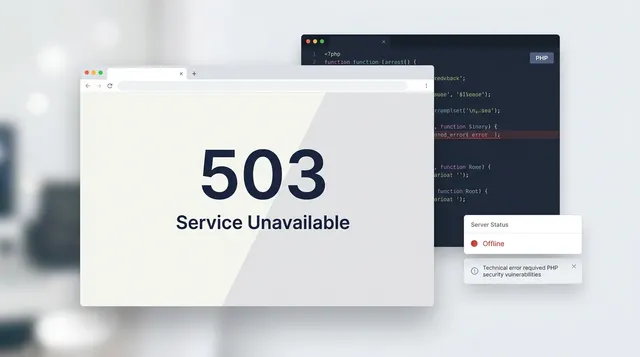
The warning has already had visible consequences. Government agencies, technology websites and large wiki-hosting services have temporarily taken websites offline as a precaution rather than risk exposing potentially vulnerable PHP servers to the public internet.
Notice: What Is Happening With PHP?
PHP is the server-side programming language behind many websites and web applications. WordPress, Drupal, Joomla, Magento and many custom websites rely on it, which means that a vulnerability in PHP itself can potentially have a much wider impact than a vulnerability affecting one individual plugin or website.
On October 20, PHP's security team announced an unusual out-of-cycle security release covering two critical vulnerabilities. Both received a CVSS v4.0 score of 9.2. The reported identifiers are CVE-2026-109618 and CVE-2026-109619. CERT-EU said the information available before the official disclosure indicated the possibility of unauthenticated remote code execution.
In practical terms, remote code execution is particularly serious because a successful attacker may be able to make a vulnerable server execute code that the website owner never intended to run. Depending on the vulnerability and server configuration, the consequences could potentially include access to website data, credentials, configuration files, or the server itself. BaCloud's security notice similarly highlighted the potential for remote execution and warned hosting providers and website administrators to prepare for immediate updates.
An important caveat: before the scheduled security release, PHP had not officially disclosed the technical details or the precise list of affected versions. Reports suggested PHP versions from PHP 5 onward could be affected, but CERT-EU described this as information based on preliminary reporting rather than final vendor documentation. PHP said it would announce the confirmed affected and fixed versions with the release.
That distinction matters. The vulnerabilities are clearly serious, but some technical claims circulating under the informal name “PHP2Shell” were based on leaks and security researchers' preliminary analysis, not PHP's complete advisory at the time of writing.
Why Are Some Websites Going Offline?
Normally, a website owner would respond to a vulnerability by installing a patch. The unusual problem here was the gap between the warning becoming public and the security update becoming available.
During that window, administrators faced an uncomfortable decision: keep an internet-facing PHP system running while details of a severe vulnerability circulated, or temporarily shut it down until they could install the official fix.
CERT-EU's recommendation was unusually direct. It advised organizations to identify their PHP applications and prepare to patch immediately. Where immediate remediation wasn't possible, CERT-EU said organizations should consider isolating internet-facing applications from public networks until they could apply a fix.
The UK's National Cyber Security Center issued very similar guidance on October 21. The NCSC told organizations to identify PHP systems, prioritize internet-facing services, monitor them for suspicious activity and install PHP updates as soon as available. Crucially, it also said that when immediate remediation wasn't feasible, organizations should consider taking the system offline until they can fully mitigate it.
Australia's ACSC likewise issued a critical alert asking organizations to identify PHP installations, monitor official PHP guidance, prepare to apply security patches and watch affected environments for malicious behavior. At the time of its advisory, the ACSC said it was not aware of confirmed active exploitation.
That last point shows how quickly the story was developing. Cloudflare CTO Dane Knecht later said the company was seeing early attacks and adjusting firewall mitigations, while other security researchers still said they had not independently confirmed exploitation. In other words, reporting on real-world attacks was evolving in real time, another reason authorities treated the situation cautiously.
Which Websites Have Gone Offline?
This is no longer merely a theoretical recommendation. Several websites and organizations have already chosen downtime over uncertainty.
In the Netherlands, security company Sansec reported that Tweakers, one of the country's largest technology websites, temporarily went offline, alongside the website of the Dutch House of Representatives — Tweede Kamer, the Dutch National Cyber Security Center, and security news site Security.NL. Sansec described these shutdowns as precautionary measures while organizations waited for the PHP update.
The shutdown of the Dutch NCSC's own public website is particularly notable. Reuters independently reported that the Dutch cybersecurity agency had taken itself offline as a precaution because of the PHP vulnerabilities. Reuters also reported that government agencies in Finland and the Netherlands were among organizations taking websites offline.
Another substantial example is wiki.gg, a hosting platform for gaming communities. Its official status page said it took its wikis offline “out of an abundance of caution” after discovering the PHP vulnerabilities. The company planned to test and deploy the patch after its scheduled release and then restore the hosted wikis.
These outages should therefore not automatically be interpreted as evidence that the organizations were hacked.
In many cases, going offline is the security measure itself. Administrators deliberately make a service unavailable before an attacker can compromise it.
That distinction matters for users who suddenly encounter a maintenance page or an unavailable government website. Temporary downtime may look alarming, but it can indicate that the site's administrators are responding conservatively to a serious security warning.
What Should Website Owners Do?
For most website owners, especially those using WordPress or another PHP-based CMS, the key point is that this isn't simply a WordPress plugin update.
The vulnerability is being addressed at the PHP/server level. Wordfence warned that standard WordPress automatic updates won't install the relevant PHP security fix, so website owners need to know who maintains PHP in their hosting environment. On shared hosting, that will often be the hosting company; on a VPS or dedicated server, it may be the customer or server administrator.
The first step is therefore to contact the hosting provider or system administrator and confirm that they are aware of the October 21 PHP security release and plan to apply the fixed packages immediately.
Organizations managing their own infrastructure should inventory internet-facing PHP systems, monitor official PHP announcements, install the fixed release as soon as it becomes available and continue monitoring servers for suspicious behavior. That advice is consistent across PHP itself, CERT-EU, the UK NCSC and Australia's ACSC.
Sites that cannot be patched promptly should seriously consider temporary isolation or downtime, particularly when they handle customer accounts, payments, personal information or other sensitive data. Keeping a business-critical site offline for several hours is inconvenient, but recovering from a fully compromised web server can be considerably more disruptive.
Administrators should also be careful with unofficial “quick fixes.” Security guidance has changed rapidly as researchers learn more about the vulnerabilities. A workaround circulating early in the incident may later prove incomplete. Official PHP updates should therefore remain the priority.
Power your blockchain projects with high-performance dedicated servers tailored for the cryptocurrency ecosystem. Whether running full nodes, validator nodes, mining software, trading platforms, or DeFi applications, Bacloud offers customizable server solutions built for stability and speed.
With powerful Intel Xeon or AMD EPYC processors, extensive memory options, and ultra-fast NVMe storage, our dedicated servers ensure your crypto infrastructure runs efficiently and securely. Full root access gives you complete service control.
What Happens Next?
As of October 21, 2026, PHP's official emergency security release was scheduled for 14:00 UTC. PHP said the release would finally provide the complete technical details, confirmed affected versions and fixed versions.
Once those packages become available, hosting providers and administrators will still need time to distribute, test and install them. BaCloud notes that operating-system repositories, hosting panels and Linux distributions do not necessarily deliver PHP packages at exactly the same moment as PHP publishes its source release.
For website visitors, that means some precautionary outages may continue for a while even after PHP announces the patch.
For website owners, the safest interpretation is straightforward: this isn't a reason to panic, but it is a reason to act quickly. The PHP team has classified both vulnerabilities as critical, major cybersecurity agencies are telling organizations to prepare immediate updates, and several well-known websites have already decided that temporary downtime is preferable to remaining exposed.
The next decisive information will come from PHP's official security release. Until affected systems are patched, taking vulnerable internet-facing services offline may be inconvenient—but for some organizations, it is currently the most cautious option.